
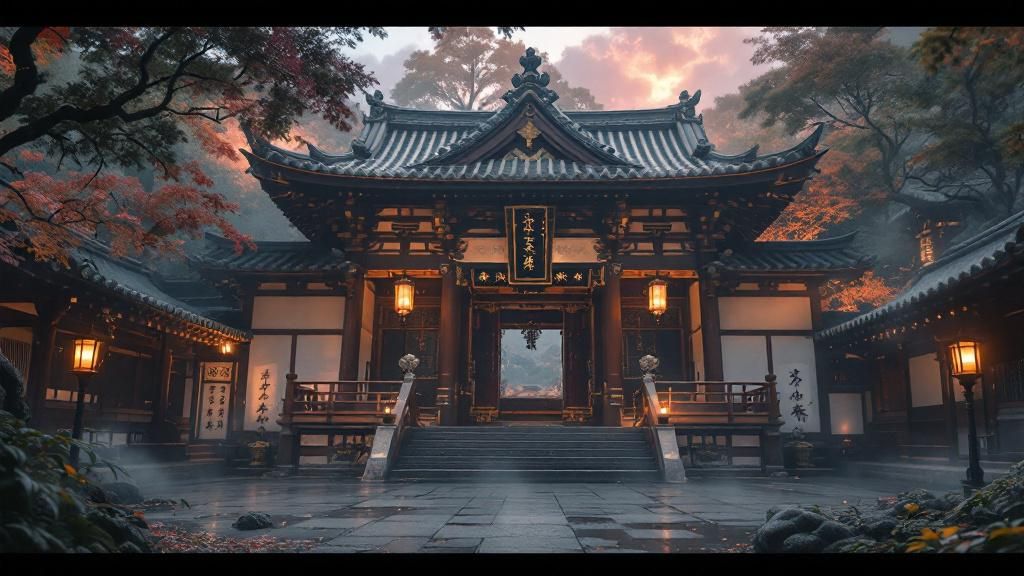
Rumiko Takahashi’s dark fantasy manga “Mao” is launching on streaming platforms in numerous regions this week, marking a significant milestone for the celebrated creator’s latest work. Viz Media has obtained North American and select international streaming rights to the animated series, which launches on Hulu in the United States on 4 April, whilst Disney+ will distribute the series across Canada, Australia, New Zealand and Latin America starting the same day. The premiere aligns with the show’s launch on NHK General TV in Japan, with Hulu Japan doing the same from 5 April. The series is set for a continuous two-cour run without interruption, bringing Takahashi’s dark fantasy tale of time-displaced students and ancient curses to audiences worldwide.
A Widely Praised Manga Series Adaptation Reaches Global Audiences
“Mao” constitutes a significant addition to the anime catalogue of Rumiko Takahashi, one of manga’s most decorated and commercially dominant figures. The distinguished author has earlier created some of the medium’s most beloved works, such as “this classic series,” “Ranma ½,” “Maison Ikkoku” and the hugely successful “her most famous creation.” Takahashi has won the Shogakukan Manga Award on two occasions and is inducted into the prestigious Eisner Award Hall of Fame, establishing her legacy as a transformative force in narrative innovation throughout various periods and storytelling styles.
The anime adaptation, created by Sunrise, comes as part of celebrations marking publisher Shogakukan’s centenary year. Takahashi first debuted “Mao” in Weekly Shōnen Sunday in May 2019, and the manga has subsequently grown to 27 collected volumes as of February 2026. Viz Media, which has maintained the English-language North American manga license since 2021, began releasing concurrent English instalments alongside Japanese publication in May 2023, guaranteeing international readers remained current with the ongoing narrative.
- Directed by Teruo Sato, who directed “Yashahime: Princess Half-Demon” Season 1
- Series composition by Yuko Kakihara with character artwork by Yoshihito Hishinuma
- Continuous two-cour run with no breaks scheduled for audiences
- Part of broader “Rumic World” canon of Takahashi’s works
The Story Behind Mao’s Shadowy Imaginary Realm
“This series” functions as a compelling supernatural fantasy that weaves together separate time periods into a unified story. The series draws its narrative strength from the clash of contemporary Japan with the historical Taisho era, creating an atmospheric backdrop where historical curses and present-day tensions converge. This temporal duality permits the author to explore themes of identity, destiny and the mysterious forces that shape human lives over generations. The work’s extensive plot has resonated with readers since its launch, establishing itself as one of the writer’s most expansive projects in ambition and conceptual richness.
The otherworldly elements at the heart of “Mao” are grounded in Japanese folklore and mystical traditions, especially through the figure of the onmyoji—a traditional spiritual practitioner skilled in esoteric arts. The series combines action-driven sequences with moments of character introspection, allowing audiences to form emotional connections with protagonists contending with forces outside their understanding. Takahashi’s characteristic approach to storytelling—blending humour with genuine tension and emotional resonance—emerges throughout the narrative, producing a narrative experience that appeals to both longtime fans of her work and new audiences discovering her distinctive style for the first time.
Nanoka’s Quest Across Time and Hexes
At the narrative’s core, features Nanoka Kiba, a middle school pupil whose life takes a dramatic turn when she is suddenly thrust back to Japan’s Taisho period. This journey through time takes place after she goes back to the commercial shopping district where she survived a mysterious and traumatic accident eight years earlier. The incident acts as the impetus behind her exceptional quest, compelling Nanoka to face buried recollections and reveal the facts surrounding the perplexing situations related to her survival in childhood and her unexpected journey between time periods.
Once thrust into the Taisho era, Nanoka meets Mao, a solitary onmyoji practitioner who has withstood nine centuries of existence whilst labouring under a devastating life-altering curse. Their introduction proves deeply transformative for both characters, as Mao’s penetrating questions prompt Nanoka to reconsider her own unusual circumstances from entirely new perspectives. Together, they establish an awkward partnership born from necessity, combining their strength to stand against the malevolent supernatural entities that have grown deeply intertwined with their respective fates and destinies.
The Takahashi Legacy and the Rumic World Sensation
Rumiko Takahashi represents one of manga’s most acclaimed and commercially successful figures, whose effect on the medium stretches across generations and remains instrumental in shaping contemporary storytelling. Her body of work, referred to as the “Rumic World,” encompasses some of the most adored and culturally influential manga series ever written. From “Urusei Yatsura” to “Ranma ½,” “Maison Ikkoku” and the massively acclaimed “Inuyasha,” Takahashi has shown an remarkable talent to create stories that resonate across generations. Her unique combination of comedy, romance, action and emotional resonance has won her a devoted global fanbase and made her a imaginative talent whose impact extends far beyond manga into animation, live-action versions and cinema.
The acclaim Takahashi has received throughout her career highlights her remarkable contributions to the medium. She has won the prestigious Shogakukan Manga Award on two occasions, cementing her status among manga’s premier creators. Beyond market achievement, Takahashi achieved the rare distinction of induction into the Eisner Award Hall of Fame, a distinction reserved for those whose work has profoundly shaped the industry. Her consistent ability to advance imaginatively whilst maintaining her characteristic creative voice has allowed her to continue engaging and revered across many years, making her an enduring icon whose work continues to inspire creators and enthrall audiences worldwide.
| Manga Title | Award Recognition |
|---|---|
| Urusei Yatsura | Shogakukan Manga Award (1981) |
| Ranma ½ | International acclaim and commercial success |
| Maison Ikkoku | Critical praise for romantic storytelling |
| Inuyasha | Shogakukan Manga Award (2002) |
| Mao | Part of Shogakukan’s centenary celebration |
- Takahashi’s works have been adapted into numerous anime series, live-action productions and theatrical films.
- Her narrative style expertly combines supernatural elements with character-driven narratives and emotional complexity.
- The “Rumic World” constitutes a cohesive creative universe spanning various genres and time periods.
Creative Vision and Production Excellence
The anime adaptation of “Mao” gains advantage from a creative ensemble with proven expertise in translating Takahashi’s supernatural narratives to life. Director Teruo Sato, who formerly directed the acclaimed “Yashahime: Princess Half-Demon” Season 1, assumes leadership for this latest project, contributing his deep knowledge of the “Rumic World” to the project. Collaborating with him is series composer Yuko Kakihara, whose narrative sensibilities correspond excellently with the dark fantasy elements that characterise “Mao.” The artistic collaboration between these experienced creators ensures that the interpretation captures both the tense atmosphere and subtle emotion present within Takahashi’s original manga.
Character design and primary animation oversight fall to Yoshihito Hishinuma, a seasoned veteran of “Yashahime” and “Inuyasha,” whose deep knowledge of Takahashi’s unique visual approach proves invaluable. The production is helmed by Sunrise, a studio celebrated for its technical excellence and commitment to animation quality. The decision to run “Mao” as a uninterrupted two-cour series without a mid-season hiatus demonstrates the creative team’s confidence in the material and their desire to maintain narrative momentum throughout the series. This uninterrupted storytelling approach allows viewers to experience the otherworldly saga in its most unified form, ensuring that the tension and character development remain consistently compelling.
Vocal Ensemble and Musical Score
Whilst information about the voice cast stay undisclosed, the production team’s track record suggests that Takahashi’s characters will be given to talented actors capable of conveying the emotional complexity demanded by her writing. The musical score, an essential component of any paranormal anime series, will be instrumental in establishing the atmospheric tone that sets apart “Mao” from traditional fantasy stories. The pairing of experienced voice actors and a meticulously designed soundtrack should work in tandem to produce an immersive experience that honours Takahashi’s vision whilst providing the production values modern viewers expect from a major streaming release.
International Release Plan and Stream Distribution
“Mao” releases at the same time across multiple territories on 4 April, representing a coordinated global release strategy that highlights the series’ importance within the anime industry. In the US, Hulu obtains sole streaming access, whilst Disney+ claims dominion over Canada, Australia, New Zealand and Latin America. This multi-platform distribution approach ensures that international audiences gain swift access to the paranormal series, reducing the traditional delays that have historically plagued anime releases outside Japan. The staggered availability across different streaming services reflects the intricate rights agreements that characterise contemporary anime releases, with Viz Media’s securing of North American and select international rights positioning the company as a vital go-between between Japanese studios and audiences in the West.
Japan’s own programming timetable sees “Mao” premiere on NHK General TV on the same date as its international rollout, with Hulu Japan beginning its stream from 5 April. The decision to broadcast the series as a unbroken two-season stretch—covering roughly 50 episodes—without interruption shows confidence in viewer interest and storytelling pace. This continuous airing format stands in stark contrast with the conventional seasonal approach preferred by many anime series, enabling viewers to witness Takahashi’s grim fantasy world in an seamless storytelling experience. Such a distribution approach suggests that producers expect sustained viewer interest, establishing “Mao” as a flagship title deserving of premium placement on streaming services across all major platforms.
